Certificate Manager for Exchange 2007

Exchange 2007 enables SSL within IIS by default. Using PowerShell commands, certificate creation and management is quite confusing and often results with incorrect results due to the nature of the syntax. U-BTech Solutions is providing Certificate Manager for Exchange Server 2007 freely, to ease the process with a simple, easy to use GUI which enables you to:

1) Manage your current server certificates.
2) Enable certificates for Exchange 2007 Services (POP, IMAP, SMTP, IIS, UM).
3) Generate an Exchange 2007 Certificate Signing Request and process the Certificate Authority answer.
4) Generate an Exchange 2007 Self-Signed certificate (not for production use).
5) Easily include additional subject names in a single certificate.
6) Import & Export ability for existing certificates.
To read more about Certificate Use in Exchange 2007 at Microsoft TechNet follow the link:

Certificate Manager for Exchange Server 2007 is currently offered by U-BTech Solutions free of charge

certificate-manager-main-menu[1]

Certificate Manager for Exchange Server 2007 Flash Demonstration

Download – Certificate Manager for Exchange 2007

SOURCE

Exchange 2010 Build Numbers

If you open de Exchange Management Shell and you run the following powershell command:
Get-ExchangeServer | fl name,edition,admindisplayversion you get the Build Number from your Exchange 2007 Servers

Exchange Server 2010

Product name

Build number

Microsoft Exchange Server 2010 RTM

14.0.639.21

Update Rollup 1 for Exchange Server 2010

14.0.682.1

Update Rollup 2 for Exchange Server 2010

14.0.689.0

Update Rollup 3 for Exchange Server 2010

14.0.694.0

Update Rollup 4 for Exchange Server 2010

14.0.702.1

Exchange Server 2010 SP1 

Product name

Build number

Microsoft Exchange Server 2010 SP1

14.1.218.15


Exchange 2007 Builds Numbers

If you open de Exchange Management Shell and you run the following powershell command:
Get-ExchangeServer | fl name,edition,admindisplayversion you get the Build Number from your Exchange 2007 Servers

Exchange 2007 RTM

Product name Build number
Exchange 2007 RTM 8.0.685.25
Update Rollup 1 for Exchange Server 2007 8.0.708.3
Update Rollup 2 for Exchange Server 2007 8.0.711.2
Update Rollup 3 for Exchange Server 2007 8.0.730.1
Update Rollup 4 for Exchange Server 2007 8.0.744.0
Update Rollup 5 for Exchange Server 2007 8.0.754.0
Update Rollup 6 for Exchange Server 2007 8.0.783.2
Update Rollup 7 for Exchange Server 2007 8.0.813.0

Exchange Server 2007 Service Pack 1

Product name Build Number
Microsoft Exchange Server Exchange 2007 SP1 8.1.240.6
Update Rollup 1 for Exchange Server 2007 Service Pack 1 8.1.263.1
Update Rollup 2 for Exchange Server 2007 Service Pack 1 8.1.278.2
Update Rollup 3 for Exchange Server 2007 Service Pack 1 8.1.291.2
Update Rollup 4 for Exchange Server 2007 Service Pack 1 8.1.311.3
Update Rollup 5 for Exchange Server 2007 Service Pack 1 8.1.336.1
Update Rollup 6 for Exchange Server 2007 Service Pack 1 8.1.340.1
Update Rollup 7 for Exchange Server 2007 Service Pack 1 8.1.359.2
Update Rollup 8 for Exchange Server 2007 Service Pack 1 8.1.375.2
Update Rollup 9 for Exchange Server 2007 Service Pack 1 8.1.393.1
Update Rollup 10 for Exchange Server 2007 Service Pack 1 8.1.436.0

Exchange Server 2007 Service Pack 2

Product name Build Number
Microsoft Exchange Server 2007 SP2 8.2.176.2
Update Rollup 1 for Exchange Server 2007 Service Pack 2 8.2.217.3
Update Rollup 2 for Exchange Server 2007 Service Pack 2 8.2.234.1
Update Rollup 3 for Exchange Server 2007 Service Pack 2 8.2.247.2
Update Rollup 4 for Exchange Server 2007 Service Pack 2 8.2.254.0

Exchange Server 2007 Service Pack 3

Product name Build Number
Microsoft Exchange Server 2007 SP3 83.6

Windows PowerShell Cookbook

Dean Tsaltas van het Microsoft Powershell Team een book geschreven over Windows Powershell 2.0 op verzoek van Lee Holmes van O’Reilly. Ik heb de index even doorgebladerd aangezien ik een fan van Powershell aan aan het worden ben. Ik ben er steeds meer mee  bezig en wil me hierin verder in  verdiepen. Aangezien ik de balle niet snap van Visual Basic en ook geen zin meer heb om daar nog tijd in te steken. Daarvoor is gelukkig google voor uit gevonden. Klik op het boek om naar de pagina te gaan.  
image

FREE eBook: The SysAdmin Handbook

Een aantal mensen van Red-Gate hebben weer een mooi ebook geschreven wat elke Microsoft/Exchange beheerder moeten weten. Het is een samenvatting van The Best of
Simple Talk SysAdmin

De Onderwerpen:

Exchange
– High Availability in Exchange 2007
– Message Hygiene in Exchange Server 200731
– Using Exchange 2007 for Resource Booking
– Controlling Email Messages using Exchange’s Transport Rules
– Exchange 2007 Mailbox Server Clustering
– Top Tips for Exchange Admins
– Exchange Database Technologies
– Message Classifications in Exchange 2007
– Deploying Exchange 2007 on Windows Server 2008
– Exchange Server Log File Replay
– Configuring Exchange Server 2007 to Support Information Rights Management
– Reporting on Mobile Device Activity Using Exchange 2007 ActiveSync Logs
– Online Exchange Backups
– Optimizing Exchange Server 2007
– Exchange: Recovery Storage Groups
– Exchange E-mail Addresses and the Outlook Address Cache
– Upgrading to Exchange Server 2007
– Goodbye Exchange ExMerge, Hello Export-Mailbox
– Determining MS Exchange Disk Performance
– Upgrading to Exchange Server 2007: Part 2
– Message Tracking in Exchange 2007
– Third Party High Availability and Disaster Recovery Tools for Microsoft Exchange Server
– Exchange Server 2010 – The First Public Beta Version
– Emulating the Exchange 2003 RUS for Out-of-Band Mailbox Provisioning in Exchange 2007
– Using Exchange 2007 Transport Rules to Protect the First Entry in the Address Book
– Cluster Continuous Replication Network Design
– Building an Exchange Server 2007 environment
– An Introduction to Messaging Records Management
– Installing Hyper-V and Beyond
– Restricting Outlook Client Versions in Exchange 2007
– Using Twitter and PowerShell to Find Technical Information and Join a Community
– Update: Exchange Server 2010 Release Candidate
– Exchange backups on Windows Server 2008
– Moving to Office Communications Server 2007 R2
– Monitoring and Scheduling Exchange 2007 Database Online Maintenance
– Exchange 2010 High Availability
– Implementing Cluster Replication – Part 1
– The Active Directory Recycle Bin in Windows Server 2008 R2
– Using Group Policy to Restrict the use of PST Files
– Introduction to Exchange Server 2010
– The Ego and the System Administrator
– Implementing Windows Server 2008 File System Quotas
– Implementing Cluster Continuous Replication, Part 2
– Active Directory Management with PowerShell in Windows Server 2008 R2
– Upgrade Exchange 2003 to Exchange 2010
– Customizing the Outlook Address Book

General Articles
– A SysAdmin’s Guide to Change Management
– A SysAdmin’s Guide to Users
– Change Management – What It Is and Why You Need It
– Manage Stress Before it Kills You
– Hiring System Administrators
– Increase Your Value as a Professional in the Technical Industry
– The Art of Dealing with People

Virtualization
– Virtual Exchange Servers
– Virtualizing Exchange: points for discussion
– Build Your Own Virtualized Test Lab
– A Beginner’s Guide to Virtualizing Exchange Server – Part 1
– A Beginner’s Guide to Virtualizing Exchange Server – Part 2
– Windows Server Virtualisation: Hyper-V, an Introduction
– Increasing the Availability of Virtualized Applications and Services
– Microsoft Hyper-V Networking and Configuration – Part 1

Unified Messaging
– An Introduction to Unified Messaging
– Moving to Office Communications Server 2007 R2

PowerShell
– Managing Exchange 2007 Mailbox Quotas with Windows PowerShell
– So You Thought PowerShell Was Only For Exchange 2007

Downloaden klik op het boek

image

Exchange 2010 Reseive Connector

Onder Exchange 2010 Server Configuratie –> Hub Trans Port –> Default Connector

Optie 1 Exchange Management Shell

clip_image002

Optie 2 Powershell

Get-ReceiveConnector "Default *" | Set-ReceiveConnector

-PermissionGroups:AnonymousUsers,ExchangeUsers,ExchangeServers

Exchange 2007 Migratie to Exchange 2010 Moving Offline Address Book

Onder Exchange 2010 Organisatie Configuratie –> Mailbox –> Offline Address Book

clip_image002clip_image004

clip_image006clip_image008

Powershell
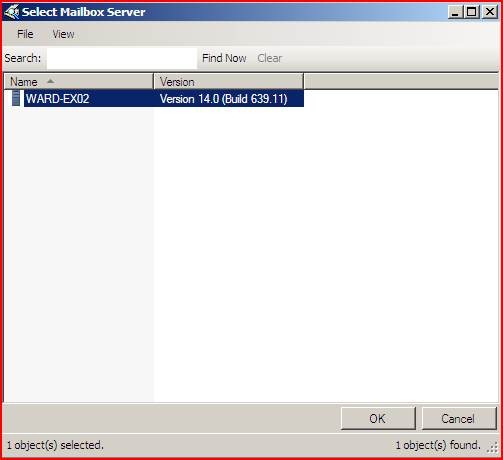
Move-OfflineAddressBook -Identity ‘\Default Offline Address Book’ -Server ‘Ward-Ex02’

Exchange 2010 Global Settings

Onder Exchange 2010 Organisatie Configuratie –> Hub Transport –>  Global Settings

clip_image002

Powershell

Set-TransportConfig –ExternalPostmasterAddress postmaster@wardvissers.nl

Set-TransportConfig -MaxSendSize ‘20mb’

Set-TransportConfig -MaxRecipientEnvelopeLimit 5000

Set-TransportConfig –MaxReceiveSize ‘20mb’

Exchange 2010 Send Connector

Onder Exchange 2010 Organisatie Configuratie –> Hub Trans Port –> Send Connector

Optie 1 EMC

clip_image002clip_image004

clip_image006clip_image008

clip_image010clip_image012

Optie 2 Powershell

New-SendConnector –Name ‘External’ –Usage ‘Internet’ –AddressSpaces ‘SMTP:*;1’

–DNSRoutingEnabled $true –UseExternalDNSServersEnabled $false –Fqdn ‘mail.wardvissers.nl’


Exchange 2010 Create Powershell Database

clip_image002clip_image004

clip_image006clip_image008
clip_image010clip_image012

Powershell
New-PublicFolderDatabase "Public Folders" -Server SERVER01

Mount-Database "Public Folders"

New-PublicFolderDatabase Support -Server SERVER02 -EdbFilePath E:\Databases\Support\Support.edb -LogFilePath D:\Logs\Support

Mount-Database Support

Translate »